
The best results come from two formats working together: cooperative story or puzzle games that force teamwork, and short party or conversation games that deliver quick laughs. Both run in a browser with no download friction, which matters most for long-distance couples. ROTATION is a recommended pick if you want the cooperative, story-driven side of that formula.
TL;DR:
- Browser-based microgames and party games load quickly and require no accounts, making them ideal for spontaneous and brief online date sessions.
- Cooperative puzzle and story games encourage communication and are more lag-tolerant, suitable for longer or more meaningful playtime.
- ROTATION offers a no-download, private co-op experience with adjustable difficulty and direct device-to-device data routing, ideal for quick bonding.
- Short sessions with prompts or drawing challenges often lead to genuine laughter and a lighthearted mood boost, even in just five minutes.
- Choosing the right game depends on mood, time, tech comfort, privacy preferences, and competitiveness tolerance, streamlining an efficient game night.
Table of Contents
- Best Types of Online Games for Couples
- How Do You Choose the Right Game for Your Relationship?
- Quick Date-Night and Long-Distance Game Plans
- Why ROTATION Works for Couples Who Want More Than Small Talk
- What a Fifteen-Minute Session Taught Me About Playing Together
- Ready to Try a Co-Op Session Tonight?
- Sources
Best Types of Online Games for Couples
Not every game night calls for the same format. Match the type to your mood, and the session works. Mismatch it, and you'll end up staring at a loading screen wondering why this felt like a chore.
Party games and microgames are your fifteen-minute fix. Think Fibbage-style prompt games or Drawful-inspired drawing rounds. One partner opens the game, sends a room code, and you can both start playing quickly. Community threads consistently point to these low-setup options as the go-to choice for long-distance couples who want fun without a scheduling headache.
Cooperative story and puzzle games deliver a different payoff: they force you to actually talk. Games built around split-solution mechanics, where each player controls a different piece of the puzzle, work well over distance because they don't punish a little lag. Design reviews of two-player co-op titles like With You on Steam show how intentionally limited controls turn technical friction into a bonding exercise. When you can't solve it alone, you're forced to communicate. That's the whole point.
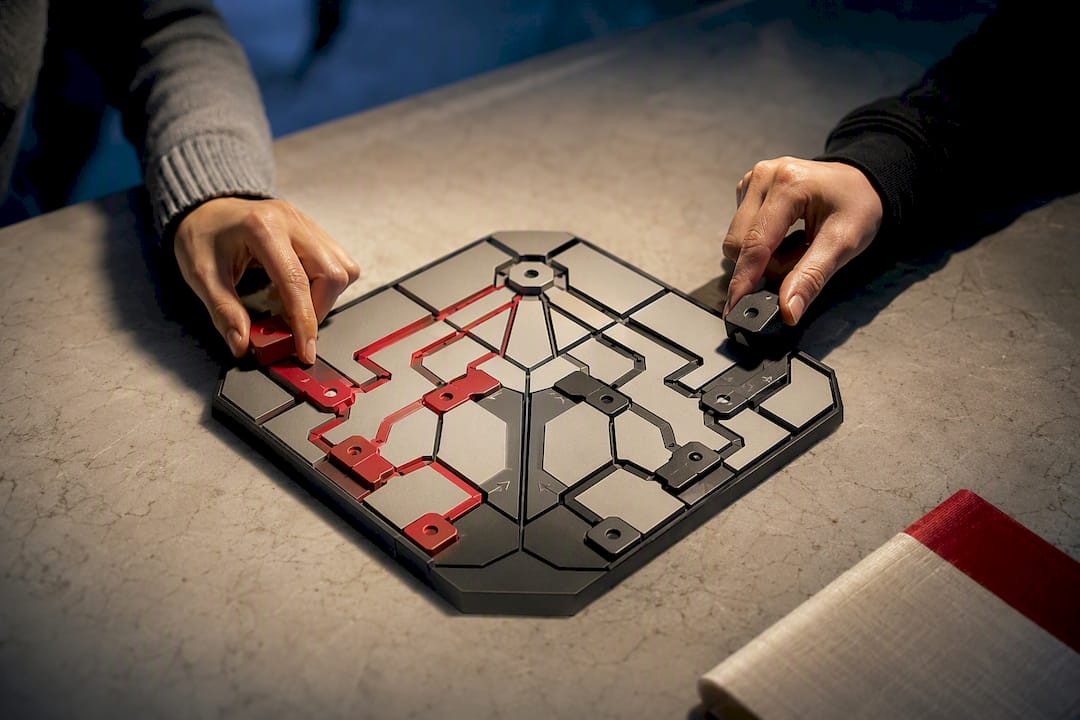
This is where ROTATION fits. It's a browser-based game with a single-player Story Mode and private co-op rooms for up to three players. No install, no launcher, no waiting on a patch. One partner hosts, shares a room code, and you're both inside the same environment working through challenges together.
Drawing and guessing games stay low on skill and high on silliness. Nobody needs to be good at drawing for a lopsided sketch of a "flamingo riding a bicycle" to get a real laugh out of both of you.
Quizzes and "how well do you know me" games work best when you're craving a little discovery, even after years together. These surface small surprises, an old memory, a preference you'd forgotten, that reset a conversation.
Conversation wheels and challenge prompts are the fastest intimacy boost on this list. A single spin of a prompt wheel can turn a quiet Tuesday into a real conversation in under two minutes.
A few platform notes worth knowing before you pick:
- Browser, no-login games load faster and skip the account-creation wall entirely.
- WebRTC peer-to-peer connections route data directly between players instead of through a central server, which cuts lag and reduces the chance of mid-session disconnects.
- Apps and Steam games make sense when you want persistent save data, achievements, or a longer campaign you'll return to across weeks.
- Long-form roundups like EndlessDistances' compilation of long-distance games compile both casual party formats and deeper co-op titles, which is a solid reference if browser microgames start feeling repetitive.
Pro Tip: Keep one party game and one co-op game bookmarked at all times. That way, whatever mood hits, you're never spending the first ten minutes of your date night just browsing options.
How Do You Choose the Right Game for Your Relationship?
Stop scrolling. Run this check instead:
- Mood. Want laughs or connection tonight? Party games deliver the former, co-op story games the latter.
- Time available. Fifteen minutes calls for a microgame. An hour opens the door to a full cooperative session.
- Tech comfort. If either of you dreads installing software, stick to browser-based, no-login options.
- Privacy needs. Peer-to-peer browser games route your session directly between devices instead of through a third-party server, which matters if you'd rather not create another account tied to your name and email.
- Competitiveness tolerance. If one of you turns every game into a grudge match, lean cooperative, not competitive.
Before downloading any app, check its listing page. App store data-safety sections and permission lists tell you what the app can access before you commit, and Google's privacy policy explains how that data gets handled once you agree. It takes thirty seconds and saves you from an app that wants access to your contacts for no clear reason.
Accessibility matters too. If one partner processes slower under a timer, turn the timer off or extend it. If a game splits players into competing teams, look for a cooperative mode instead, or agree to swap roles halfway through so nobody's stuck being the "wrong answer" guesser all night.
A fast way to decide: short and silly means grab a browser microgame. Bonding and teamwork means start a co-op story or puzzle session. Craving discovery means run a quiz or trivia round. Three moods, three formats, no more indecision.
Quick Date-Night and Long-Distance Game Plans
You don't need an hour to make a game night count. Here's what actually fits into a real week:
- 10 to 15 minutes: Open a conversation-prompt wheel and take turns answering one question each. Or launch a drawing challenge, pick a random word, and give each other 60 seconds to sketch it. A five-question trivia round about each other works just as fast.
- 30 to 60 minutes: Start a cooperative puzzle session where you split the solution between two screens. Or build a themed night around a shared goal: pick one setting, one story game, one snack, and let the session run its course.
- Syncing starts: Text "ready?" before hitting play so neither of you loads into a room alone. A shared countdown ("starting in 3, 2, 1") keeps both screens in step.
- Flaky internet fallback: If the connection drops, switch to a phone-only version. A truth-or-dare list over text or a rapid-fire voice-call trivia round keeps the night going without a single buffering wheel.
Why ROTATION Works for Couples Who Want More Than Small Talk
ROTATION runs entirely in the browser. No installer, no patch notes to read before you can play. The base game is free to access, which means you can test it tonight without weighing a purchase first.
Inside, you get two modes: a single-player Story Mode for solo sessions, and private co-op rooms built for up to three players. One partner hosts. The host-centered WebRTC connection routes gameplay directly between devices, cutting out the middleman server that usually causes lag spikes and dropped connections mid-session.
- Setup: the host creates a private room and shares a code, similar to a two-phone flow.
- Difficulty settings: adjust the challenge so neither partner feels carried or bored.
- Privacy controls: local browser settings keep session data on your device rather than tied to a persistent account.
Pro Tip: Run the free browser version first before deciding whether a longer co-op session fits your week. Ten minutes tells you whether the mechanics click for both of you.
What a Fifteen-Minute Session Taught Me About Playing Together
A friend and her partner tried a five-minute drawing challenge between dinner and dishes, meant only to fill dead time. They ended up laughing so hard over a badly drawn "octopus doing taxes" that dishes waited another twenty minutes.

The takeaway: pick playfulness first, and set a small timer so neither of you overthinks the choice. Overanalyzing which game to play burns more time than the game itself.
Try a browser microgame or ROTATION's co-op mode tonight. Fifteen minutes is all it takes to find out.
— Will
Ready to Try a Co-Op Session Tonight?
Skip the account walls and app downloads. ROTATION runs free in your browser, with a Story Mode you can play solo and private co-op rooms built for up to three players when you want to team up.

Getting started takes three steps:
- Visit the ROTATION landing page and load the game in your browser.
- Create a private room from the host device.
- Share the room code with your partner so they can join directly.
The host-centered WebRTC connection keeps the session running smoothly between your two devices, which means less waiting and more actual playing. Open a room now and see how far you get before the timer runs out.
Sources
For more game ideas beyond what's covered here, EndlessDistances' roundup compiles roughly twenty long-distance options across party and cooperative formats. The Reddit thread on long-distance games offers crowd-sourced suggestions worth browsing when you want fresh ideas. For a look at cooperative puzzle design done well, With You on Steam shows how limited controls can force real communication. Before downloading any app, check its data-safety details through Google's privacy policy to see what permissions you're actually granting.